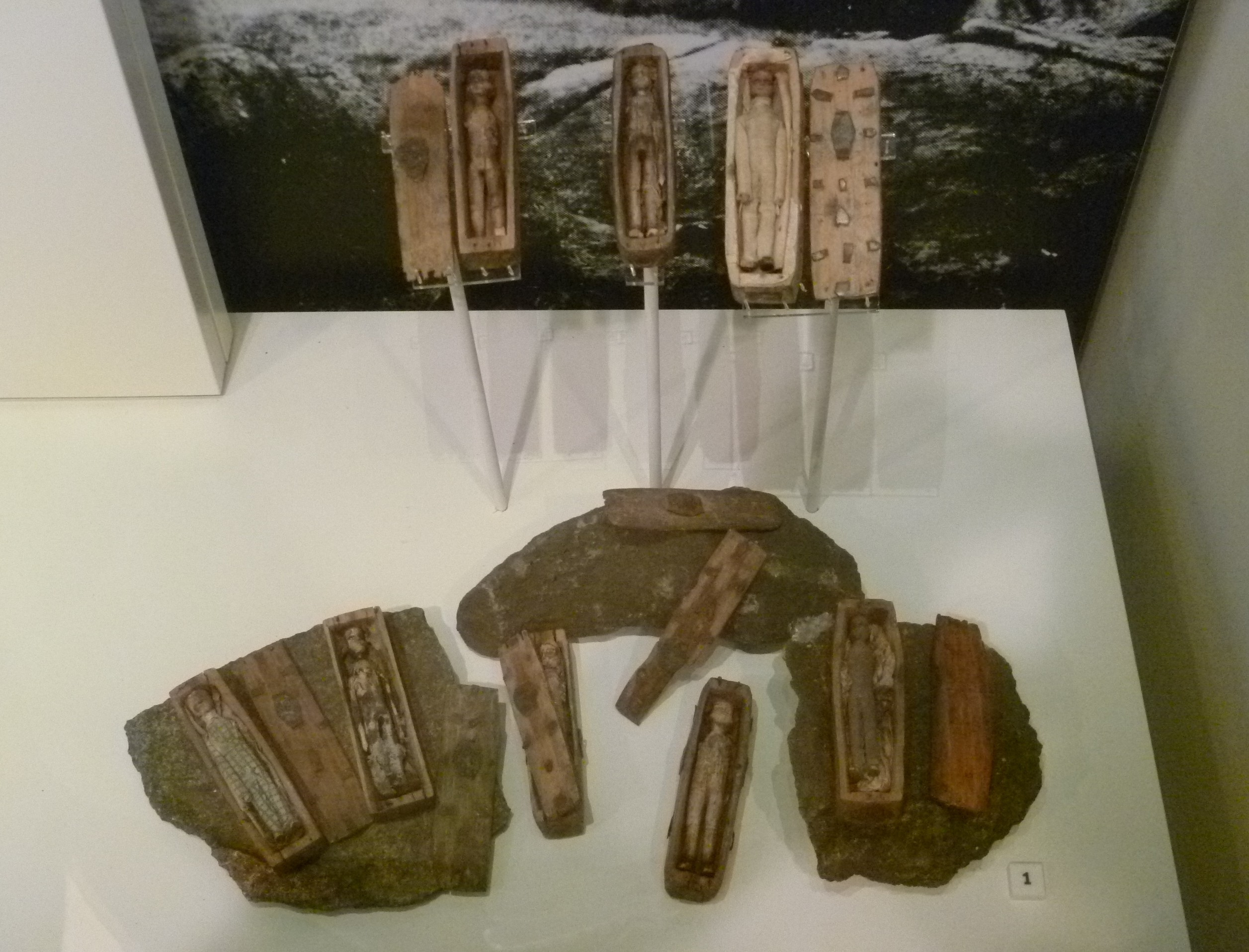

A complete, concise Archive account of a case whose surviving record does not support a full investigation.
Arthur’s Seat, Edinburgh, Scotland · Late June 1836
Complete and free to read
There were eight coffins in the first tier. Eight in the second. One above them.
That was the arrangement described after a group of boys, searching for rabbits on Arthur’s Seat, found a small opening in the rock. Three pieces of slate concealed what lay inside.
The coffins were only a few inches long. Each held a wooden figure, dressed in cloth.
Someone had cut the wood, fitted the lids and prepared the little occupants. Then the seventeen had been placed together on the hillside above Edinburgh.
The discovery reached the newspapers in July 1836. The explanations followed almost immediately.
The maker did not.
Behind the Slates
The Scotsman published its account on 16 July, describing a discovery made about three weeks earlier on the north-eastern side of Arthur’s Seat.
The coffins had been hollowed from individual pieces of wood, with separate lids secured by pins. Small metal ornaments decorated their surfaces. Inside, the figures had faces, clothes and the appearance of having been laid out for burial.
The arrangement seemed deliberate. So did the protection offered by the slates.
But the scene was disturbed almost as soon as it was found. The newspaper reported that the boys had thrown some of the coffins at one another, destroying an unspecified number.
No measured plan preserves the recess and its contents. The exact spot is no longer securely identified. What remains of that first encounter is the newspaper description—and the objects that escaped it. [1, 2]
The Eight That Survived
Later in 1836, coffins from the discovery were being shown in the private museum of Robert Frazer, an Edinburgh jeweller and antiquarian.
Eight eventually entered the national collection through Christina Couper’s donation in 1901. They are now held by National Museums Scotland.
The route between those collections is not documented at every stage. The 1994 study found strong circumstantial evidence connecting the surviving eight with Frazer’s group, rather than a complete sequence of recorded transfers.
The other nine are unaccounted for. Some were reportedly destroyed at discovery; the record does not tell us the fate of each one.
That loss matters. The surviving figures can be examined closely, but they cannot tell us whether all seventeen were alike. [2, 3]
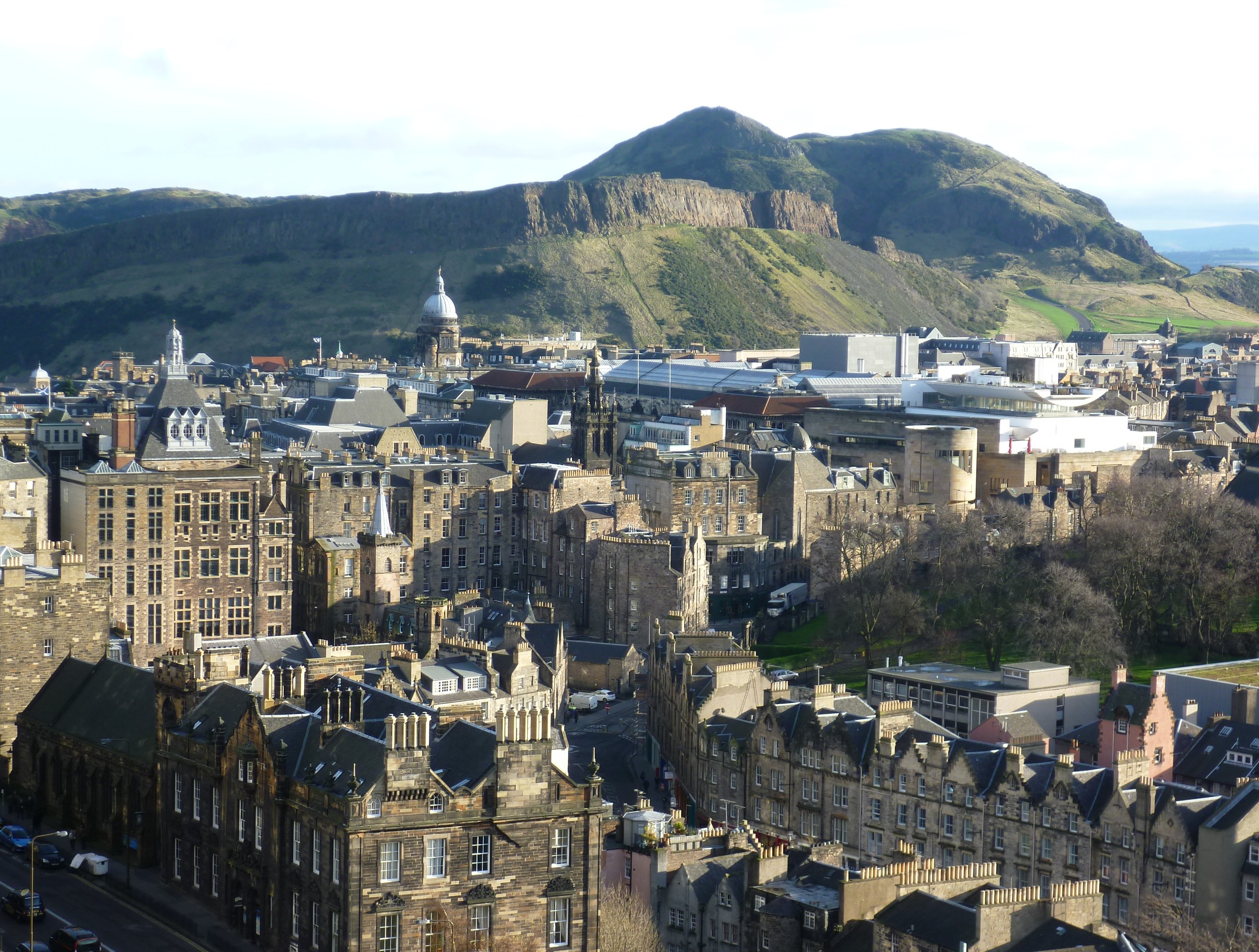

A Life Before the Coffin
The figures have an unexpected quality for objects found in little graves.
Their eyes are open.
They stand upright, with flat feet and a bearing more suggestive of soldiers than corpses. The surviving examples resemble a set, rather than separately commissioned portraits.
In their detailed examination, published in 1994, Samuel Pyeatt Menefee and Allen D. C. Simpson proposed that the figures had begun as toys. Their construction and appearance suggested model soldiers, later clothed and placed in coffins.
Some arms were already missing when the cloth was fitted. At least part of their history therefore preceded their preparation for burial.
The coffins themselves are Scots pine, approximately 95–104 millimetres long. Differences in workmanship suggest one or perhaps two makers. The tools and metal fittings led the researchers to consider a connection with shoemaking or leatherworking.
These are clues to a craftsperson’s workbench. They do not identify the person who stood at it. [3]
The Date in the Thread
The earliest account imagined a burial place used over many years.
Some coffins were badly decayed. Others seemed comparatively fresh. The newspaper took those differences to mean that the little burials had been made at intervals, with the uppermost coffin added recently.
Later examination could not establish that sequence.
Damp might have reached some positions more readily than others. Without the original conditions in the recess, decay alone cannot tell us how much time separated the deposits.
The clothing offered another approach. The study identified several kinds of sewing thread, including three-ply cotton associated with use from about 1830. Taken together, the evidence suggested that the figures had probably been prepared over a relatively short period in the 1830s.
It was a narrower window, not an exact date. The wooden figures could have been older than their clothes. Nor could the analysis determine whether all seventeen were placed in the recess on a single occasion. [3]
The Evidential Divide
What survives: eight coffins and figures, early newspaper descriptions, a museum record and later examination of the materials.
What is missing: the maker’s identity, a securely located findspot, an account of the concealment and an explanation of what the seventeen represented.
A Spell Against the Living?
The first newspaper account reached for witchcraft.
Its language was theatrical, invoking witches who could bring death by burying a likeness of the intended victim. The writer qualified the suggestion with a professed rejection of witchcraft and demonology, then returned to the image of a hidden workshop of spells.
It was an interpretation of the discovery, not evidence recovered with it.
When the Society of Antiquaries described the coffins in 1902, it drew a different distinction. Effigies used to harm people were associated with piercing, burning or other deliberate injury. These figures had been clothed and enclosed with apparent care.
The Society favoured a symbolic, honourable burial.
The same small objects could suggest either hostility towards the living or concern for the dead. Nothing written by their maker survives to decide between those intentions. [1, 2]
Graves for the Absent
Other newspapers had already considered the possibility of remembrance.
The Edinburgh Evening Post referred to a reported Saxon custom of burying an effigy when a friend died abroad. The Caledonian Mercury mentioned sailors who were said to ask their wives for a symbolic Christian burial if they were lost at sea.
Such explanations offered a reason to make a coffin without a body.
They did not supply a name, a ship or a bereaved household connected with Arthur’s Seat.
A later proposal treated the objects as protective charms, drawing comparisons with small coffins associated with German seafaring traditions. Perhaps they had been stored for future use or sale.
Again, the resemblance suggested a possibility. No documented connection brought that practice to this particular recess in the Edinburgh rock. [2–4]
Why Seventeen?
For Menefee and Simpson, the number suggested a more local explanation.
In 1827 and 1828, William Burke and William Hare supplied bodies to the Edinburgh anatomist Robert Knox. Their first sale involved a man who had died naturally. Sixteen murders followed.
Seventeen bodies in all.
Could the coffins have been an act of remembrance for those whose remains had passed into the dissecting rooms? A substitute burial, made privately, for people denied the funeral their maker believed they should have received?
The proposal connects the number with a notorious episode in the same city, shortly before the probable preparation of the figures.
But the connection remains circumstantial. There are no names on the coffins linking them to the dead. No letter describes the undertaking. No witness identifies its author.
The uniform figures need not have been portraits to serve as memorials. Equally, their uniformity cannot establish whom they represented.
And the count requires care: sixteen murder victims and one person who died naturally, not seventeen people murdered by Burke and Hare. [3]
A Mystery Still Acquiring Objects
The coffins have continued to inspire responses of their own.
In December 2014, another miniature coffin was sent to the National Museum of Scotland. It was marked with the Roman numeral XVIII—eighteen—and accompanied by a message thanking the museum for caring for the surviving eight.
This was a modern addition to the story, not the recovery of one of the missing originals.
It shows how readily the unfinished sequence invites someone to continue it. The original seventeen remain without an explanation, even as their afterlife grows. [4]
Evidence Assessment
| Evidence | What it establishes |
|---|---|
| Reports published in 1836 | An early account of seventeen coffins, their arrangement and discovery. No measured excavation record survives. |
| Eight surviving coffins | Physical objects available for direct study, although fewer than half of the reported group remain. |
| Figures, cloth and thread | Evidence consistent with reused figures and preparation probably in the 1830s; not an exact date of concealment. |
| Burial and magical parallels | Possible interpretations of the form, without a demonstrated connection to the maker. |
| Burke and Hare correspondence | A suggestive match of number, place and period. No direct documentary link has been established. |
Archive Assessment
The coffins are authentic historical objects. Their mystery is not whether they existed, but what someone intended by making and concealing them.
Examination has brought that person a little closer. We can consider the wood they cut, the fittings they used and the thread with which the figures were dressed. We can distinguish an older toy from its later preparation for a coffin.
The motive remains beyond those details.
The Burke and Hare interpretation offers a specific historical reason for seventeen miniature burials. The earlier suggestions of spells, absent sailors and symbolic funerals preserve other ways the discovery was understood. None has acquired the evidence needed to become an identification.
What remains is a small, deliberate arrangement whose care has outlasted its meaning.
Two tiers of eight. One above them. And no surviving explanation for the last.
Archive Classification
Authentic / Unresolved
An authentic nineteenth-century discovery with eight surviving objects available for study. Their materials and construction support a probable period of preparation, but the maker, purpose and significance of the number seventeen remain unestablished.
Key Facts
- Location: Arthur’s Seat, Edinburgh, Scotland.
- Discovery: Late June 1836, according to the chronology of the first newspaper account.
- First substantial report: The Scotsman, 16 July 1836.
- Reported find: Seventeen miniature wooden coffins containing clothed figures.
- Surviving examples: Eight held by National Museums Scotland.
- Probable preparation: The 1830s, based on the material examination; no exact burial date.
- Unresolved question: Who prepared them, and whom or what did they represent?
Read the Documentary Record
Historical Account · 1902
The Museum Record and Newspaper Extracts
The Society of Antiquaries’ meeting notes describe the eight coffins and reproduce extracts from the early newspaper coverage. They also include an illustration and an interpretation favouring symbolic burial.
The relevant section occupies printed pages 460–463. In this six-page PDF, it begins on page 3.
Read the Historical Account · PDF
Published in Proceedings of the Society of Antiquaries of Scotland, volume 36, 1902, within “Meeting notes: 10 March 1902”, pp. 458–463. The newspaper passages are historical reprints, not photographs of the original newspaper pages. This link opens the Society’s copy.
Research Study · 1994
Examining the Coffins
Samuel Pyeatt Menefee and Allen D. C. Simpson’s study brings together the documentary history, examination of the surviving objects and the proposed Burke and Hare connection.
The publisher makes this PDF available for personal research and private study. The article and its illustrations are linked here, not reproduced or offered as freely reusable material.
Continue Through the Archive
For another historical investigation in which physical evidence survives more readily than the intentions behind it, continue with The Somerton Man.
Sources
- The Scotsman, 16 July 1836; Edinburgh Evening Post, 20 August 1836; and Caledonian Mercury, 1836. Early accounts discussed in the studies below.
- Society of Antiquaries of Scotland, “Meeting notes: 10 March 1902”, Proceedings, volume 36, pp. 458–463; coffin account on pp. 460–463. DOI: 10.9750/PSAS.036.458.463.
- Samuel Pyeatt Menefee and Allen D. C. Simpson, “The West Port Murders and the Miniature Coffins from Arthur’s Seat”, Book of the Old Edinburgh Club, new series, volume 3, 1994, pp. 63–81.
- National Museums Scotland, “An unsolved mystery: The coffins found on Arthur’s Seat”. Museum account of the objects, interpretations and the modern coffin received in 2014.
Further Reading
Mike Dash, “Edinburgh’s Mysterious Miniature Coffins”, Smithsonian Magazine, 15 April 2013. A longer account of the discovery and its competing interpretations.
Image Credits
Coffins: “Arthur’s Seat coffins”, photographed by Kim Traynor, 20 July 2011. Wikimedia Commons, CC BY-SA 3.0. Displayed at reduced size.
Landscape: “View of Arthur’s Seat from Edinburgh Castle”, photographed by Kim Traynor, 26 January 2012. Wikimedia Commons, CC BY-SA 3.0. Displayed at reduced size.
Editorial note: late June 1836 follows the first newspaper report’s description of a discovery about three weeks before 16 July. The 1902 account uses July in its introductory summary. The probable dating of the clothing is distinguished from the unknown date and circumstances of concealment.