
Key Facts
- Location: Nasu, Tochigi Prefecture, Japan.
- Discovery: The stone was found split on 5 March 2022.
- Local name: Sesshō-seki, the Killing Stone.
- The legend: Tamamo-no-Mae, a fox spirit associated with the rock.
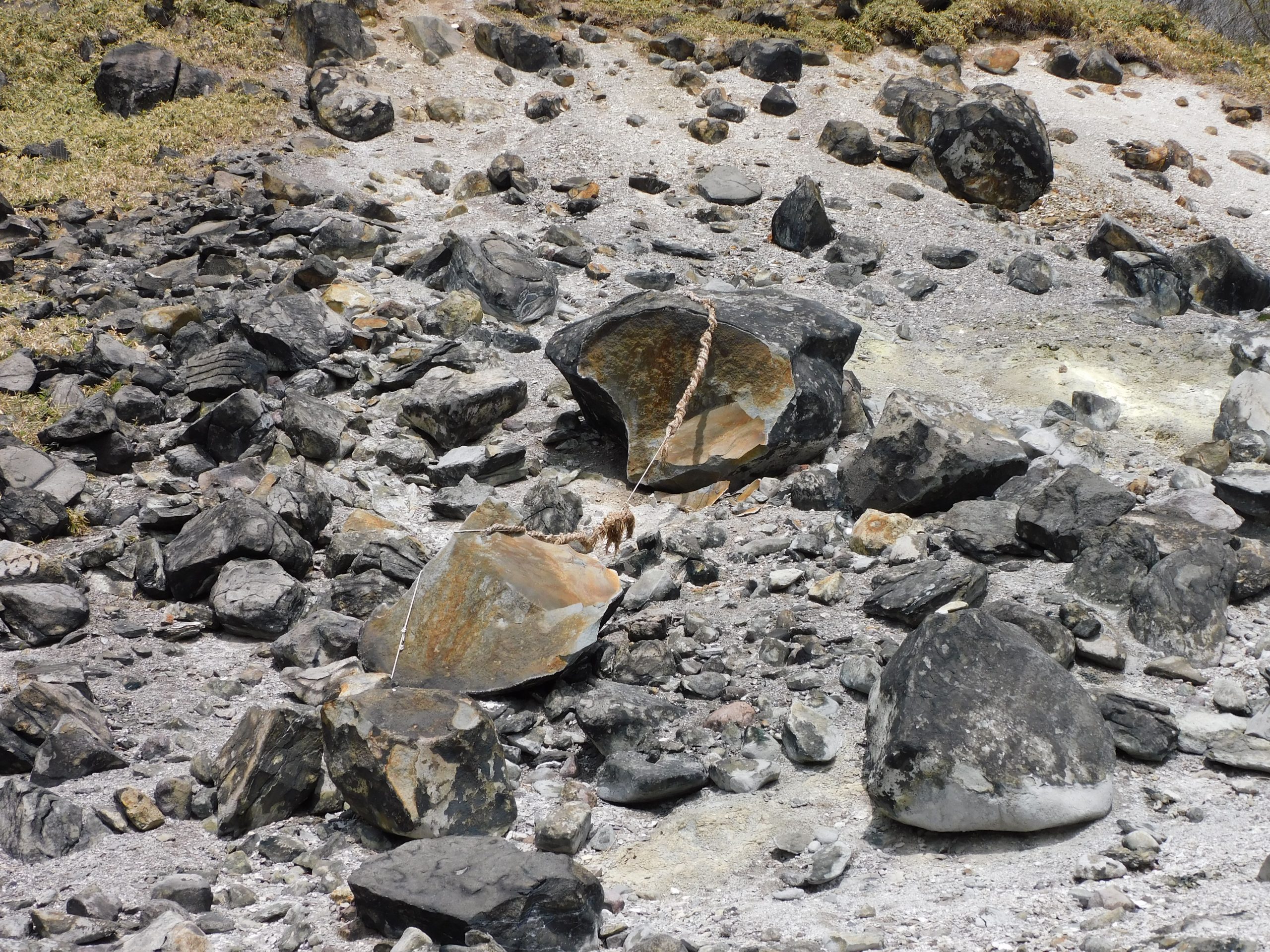
The photograph showed two pieces of rock where visitors had expected one. On the evening of 5 March 2022, staff from Nasu’s tourism association went to look. The Killing Stone had split.
No one in the contemporary account had seen it happen. The photograph had appeared on Twitter; enquiries followed, and the staff confirmed the break at the site.[1]
For another stone, that might have been the whole story. This one was associated with a nine-tailed fox whose body, or spirit, was said to inhabit the rock.
The question travelled much further than Nasu: if the stone had opened, what had happened to the fox?
The Fox and the Killing Stone
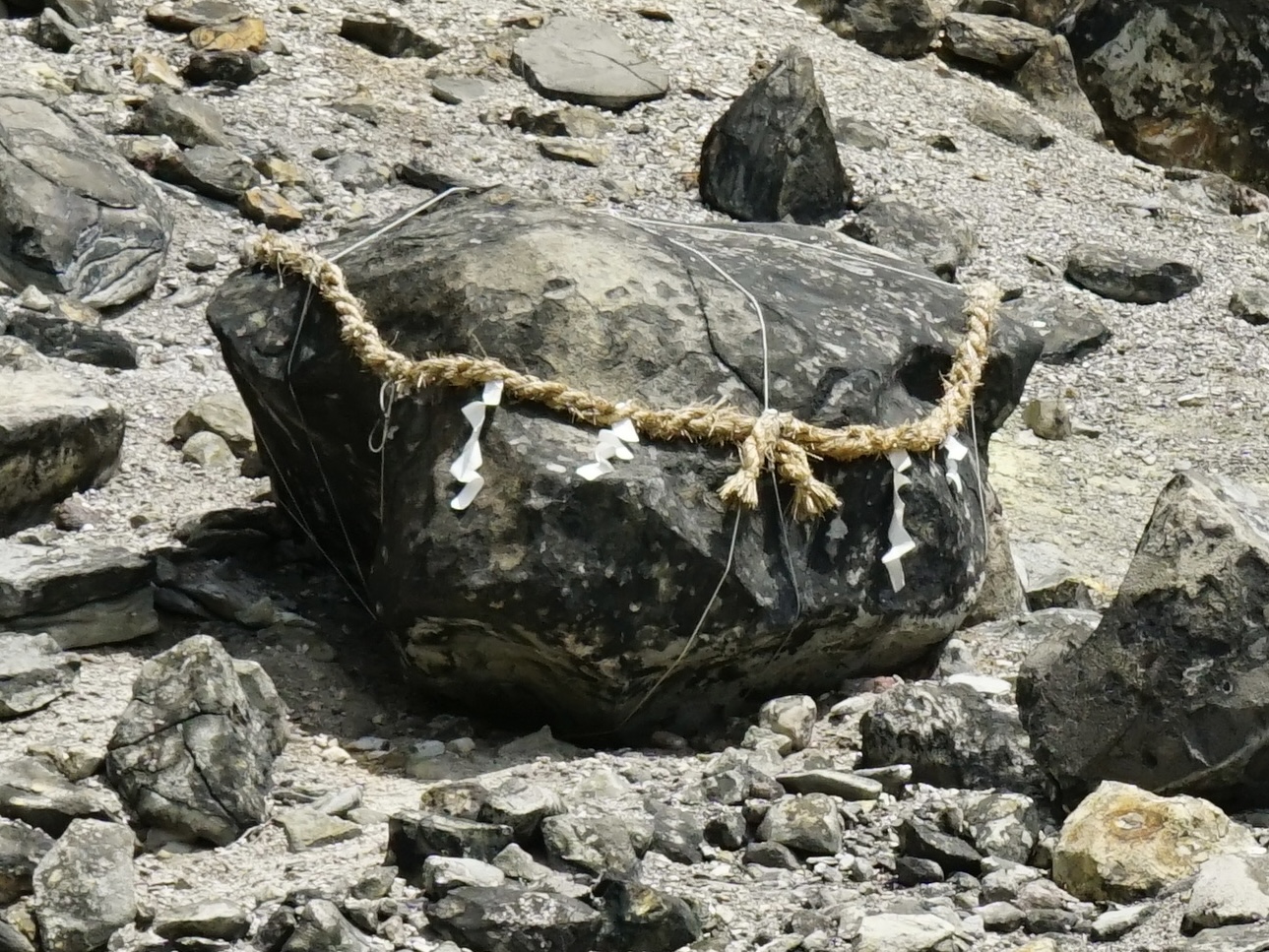
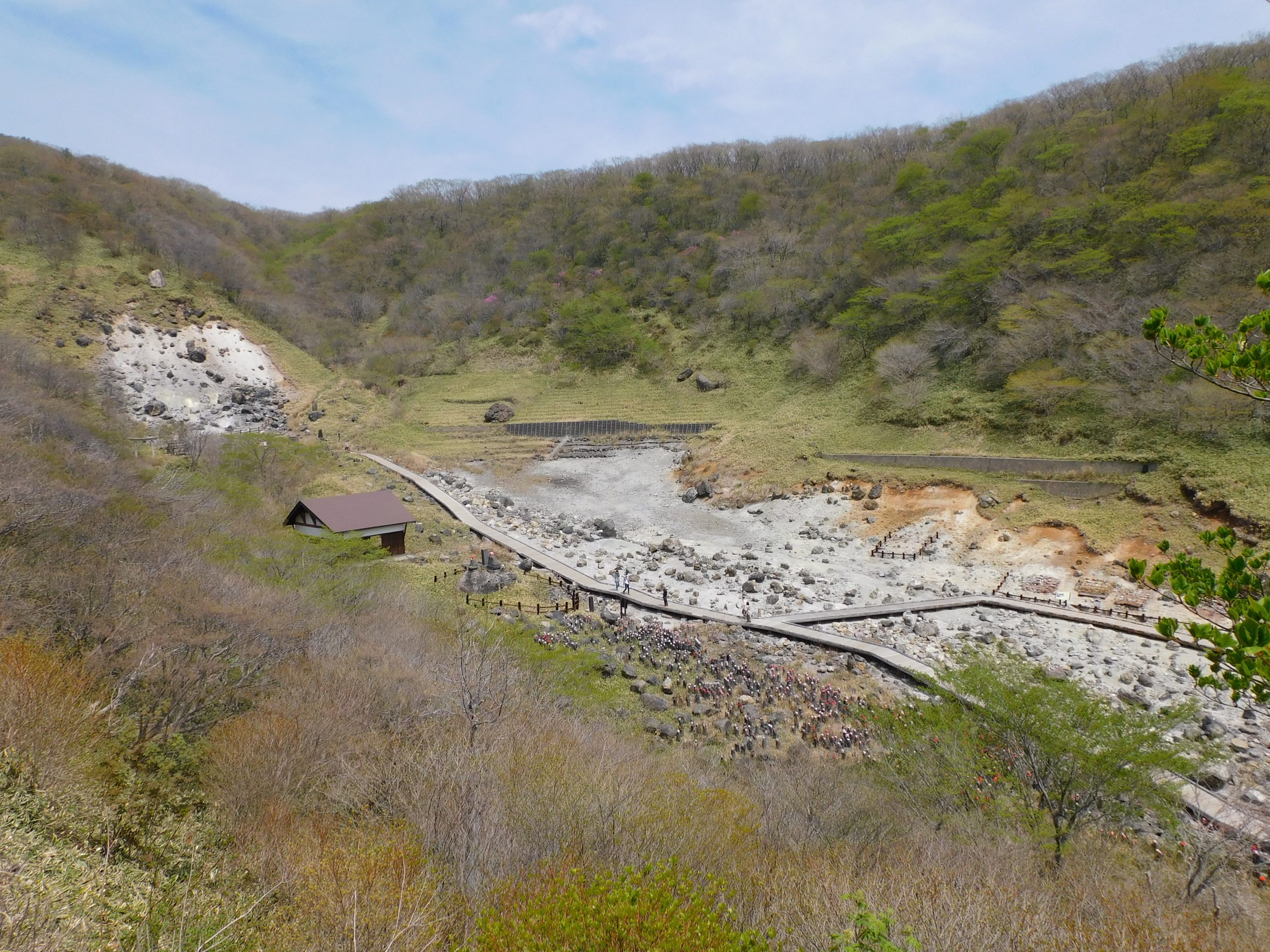
The Sesshō-seki stands in a stony valley near Nasu Yumoto’s hot springs. Sulphurous gases emerge from the ground. Paths lead through the site, past rows of small Buddhist statues, towards the rock that gave the place its reputation.
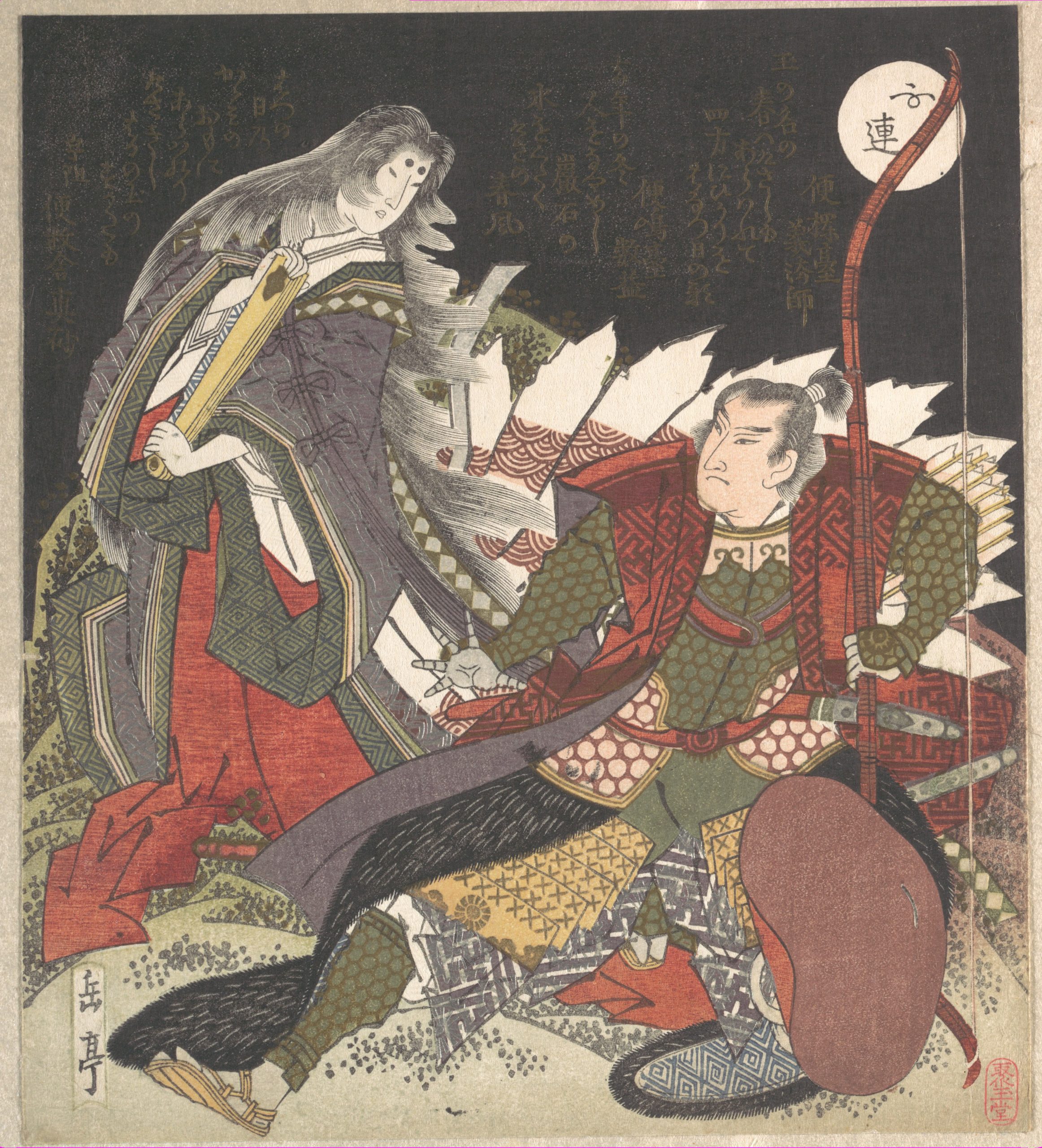
In the version told by the local visitor centre, a golden fox with nine tails takes the form of an elegant woman. Calling herself Tamamo-no-Mae, she enters the court of the retired Emperor Toba and wins his favour. When he falls ill, a diviner discovers her identity.
The fox escapes to Nasu. Troops pursue and kill her, but in the legend her death does not end the danger. Her body becomes a boulder, and her malice survives within it. The rock gives off poisonous vapours that kill creatures lingering nearby. That is why it is called the Sesshō-seki: the Killing Stone.[2]
A Stone Already Broken
The familiar account of a spirit imprisoned for centuries leaves something out. In older local versions, the stone had already been broken.
Nasu Town’s account, published before the 2022 event, describes the Buddhist priest Gennō confronting it. At his commanding cry, the rock breaks into three pieces, one of which remains at Nasu. The visitor centre tells the episode differently: Gennō strikes it with a hammer, sending fragments to other parts of Japan.[3][4]
The Noh play Sesshōseki offers another ending. A woman warns the passing priest about the lethal rock, then reveals herself as Tamamo’s ghost. After he conducts a Buddhist service, the stone splits and the fox spirit appears. Eventually, the spirit promises to do no further harm.[5]
The versions give different meanings to the same act. Breaking the stone can release the fox, scatter its power or bring its violence to an end. The 2022 headlines returned to one possibility, but the tradition contained others.

What the Break Might Mean
The news arrived during the pandemic and shortly after Russia’s invasion of Ukraine. Some interpreted the timing as ominous. Others imagined that a newly released fox might intervene on humanity’s behalf. The response included humour as well as unease; a social-media remark cannot tell us how firmly its author believed it.[6]
The tourism association offered a hopeful reading. On 23 March, it announced a memorial and prayer for peace. Its statement described the returning nine-tailed fox as an auspicious, divine beast: perhaps the break might herald an end to the pandemic and a more peaceful world.
The ceremony took place on 26 March. Shrine rites and drumming were among the announced elements; the mayor’s activity record confirms the gathering at the stone. A photography campaign accompanied it, inviting people to visit and share images.[7][8]
The ceremony brought an international news story back to its local setting. Around the damaged landmark, people gathered to remember the fox and express hopes for the world beyond Nasu.

The Crack and the Story
The physical explanation begins before March 2022. Contemporary local reporting said cracks had been visible for several years, and town officials considered a natural fracture likely. Water entering a crack and expanding as it froze was subsequently suggested as a possible mechanism. The precise sequence was not witnessed.[9][6]
The name also has a physical setting. Toxic gases emerge from the volcanic ground around the stone; the danger does not require an animal to touch the rock. In December 2022, eight wild boar were found dead nearby. An Environment Ministry official suggested that they had inhaled hydrogen sulphide, which can collect near ground level. The deaths did not establish that the March fracture had released anything harmful.[10]
Weathering offers a likely explanation for the break, and volcanic gases help explain the site’s reputation. The event’s meaning was another matter. To some it suggested danger; to others, release or renewal. The same two pieces of stone could support very different expectations.
In the May photographs, the pieces remain inside their low enclosure. Visitors could now see a gap where the rock had held together. What they made of that gap depended, as much as ever, on which story they brought with them.
Archive Assessment
Documented Event / Living Folklore
The split and the subsequent ceremony are documented. Natural fracture is the leading explanation for the physical event. Interpretations involving the fox belong to the site’s continuing folklore; the sources examined do not establish that a spirit was released.
Sources
- TV Asahi / ANN, 6 March 2022, “The Killing Stone, known for the nine-tailed fox legend, splits in two” (Japanese). Contemporary report of the enquiry and on-site confirmation. Source.
- Japan’s Ministry of Land, Infrastructure, Transport and Tourism, “The Legend of the Nine-tailed Fox and the ‘Killing Stone’”, interpretation prepared in 2020 for the Nasu Kogen Visitor Center. English account of the setting, sacred markers and legend. Source.
- Nasu Town, “The nationally designated scenic site Sessho-seki and Nasu’s nine-tailed fox legend” (Japanese), updated 2 March 2021. A local account predating the modern split. Source.
- Nasu Kogen Visitor Center, “History and Legends” (Japanese). Used for the hammer version and the established local tradition. Source.
- The Noh.com, Sesshōseki (The Killing Stone), synopsis and highlights. Used specifically for the play’s narrative, not as a historical account. Source.
- Megan Marples, CNN, 31 March 2022, “A Japanese ‘killing stone,’ said to contain an evil 9-tailed fox spirit, has split in two”, reproduced by WRAL. Interviews with Nick Kapur and Yoshiko Okuyama. Source.
- Nasu Town Tourism Association, 23 March 2022, announcement of the 26 March memorial and peace-prayer ceremony (Japanese), distributed through Kyodo News PR Wire. Primary statement of the organisers’ intentions. Source.
- Nasu Town, mayor’s activities, 21–27 March 2022 (Japanese), published 29 March. Records the ceremony at 10 a.m. on 26 March. Source.
- Shimotsuke reporting, via Kitakan Navi, 6 March 2022, “Killing Stone splits in two at Nasu: earlier cracks, possibly a natural phenomenon” (Japanese). Used for earlier cracks and the town’s initial assessment. Source.
- ANN News, December 2022, report on eight wild boar found dead near the site on 7 December. Indexed Japanese transcript includes an interview with Environment Ministry official Toshihiko Zenyōji; video playback was not assessed. Gas poisoning was suggested, rather than established here by a laboratory report. Source.
- The Metropolitan Museum of Art, Yashima Gakutei, The Warrior Miura-no-suke Confronting the Court Lady Tamamo-no-mae as She Turns into an Evil Fox with Nine Tails, late 1820s, JP2049. Collection record and public-domain image. Source.
Japanese source descriptions and narrative details are paraphrased in English. The photographs show the stone in July 2018 and May 2022; the latter are not images of the discovery on 5 March. The two May photographs are licensed CC BY-SA 4.0; adapted copies must retain that licence or a compatible one. The earlier photograph is used under CC BY 2.5; Gakutei’s print is public domain. Source links and full credits appear beneath each image.
Continue Through the Archive
Explore more Myths, Legends & Folklore, or return to the Archive Index.