
A complete, concise Archive account. Free to read in full.
Christ Church, Barbados · Reported events, early nineteenth century
A burial vault was opened in a Barbadian churchyard, and the coffins inside were out of place.
They had been arranged carefully after the previous burial: three on the floor, others laid above them. Now they were scattered. The entrance had been closed, yet someone—or something—appeared to have disturbed the dead.
The coffins were put back. The vault was sealed again.
When it was next opened, the disorder had returned.
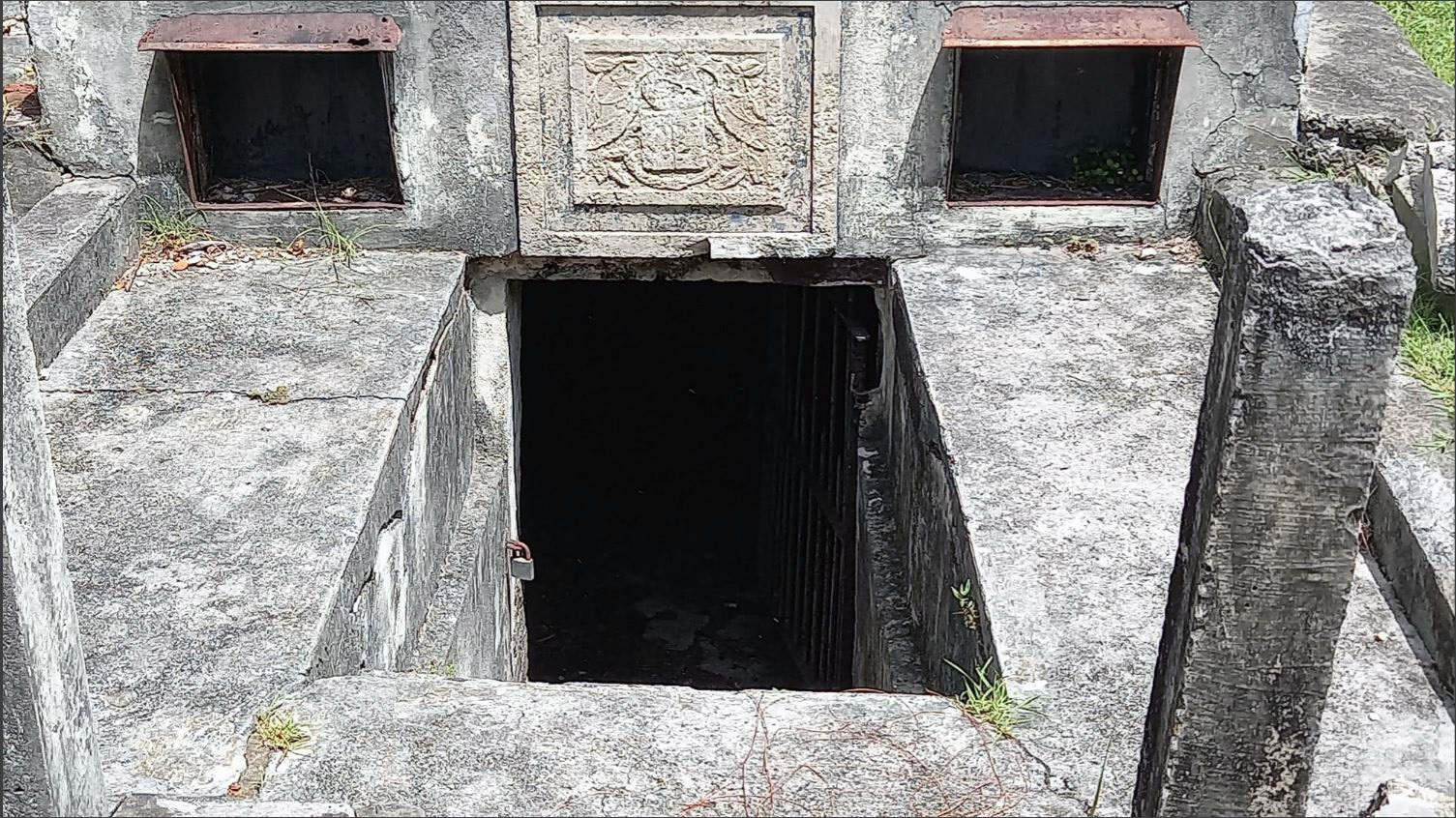
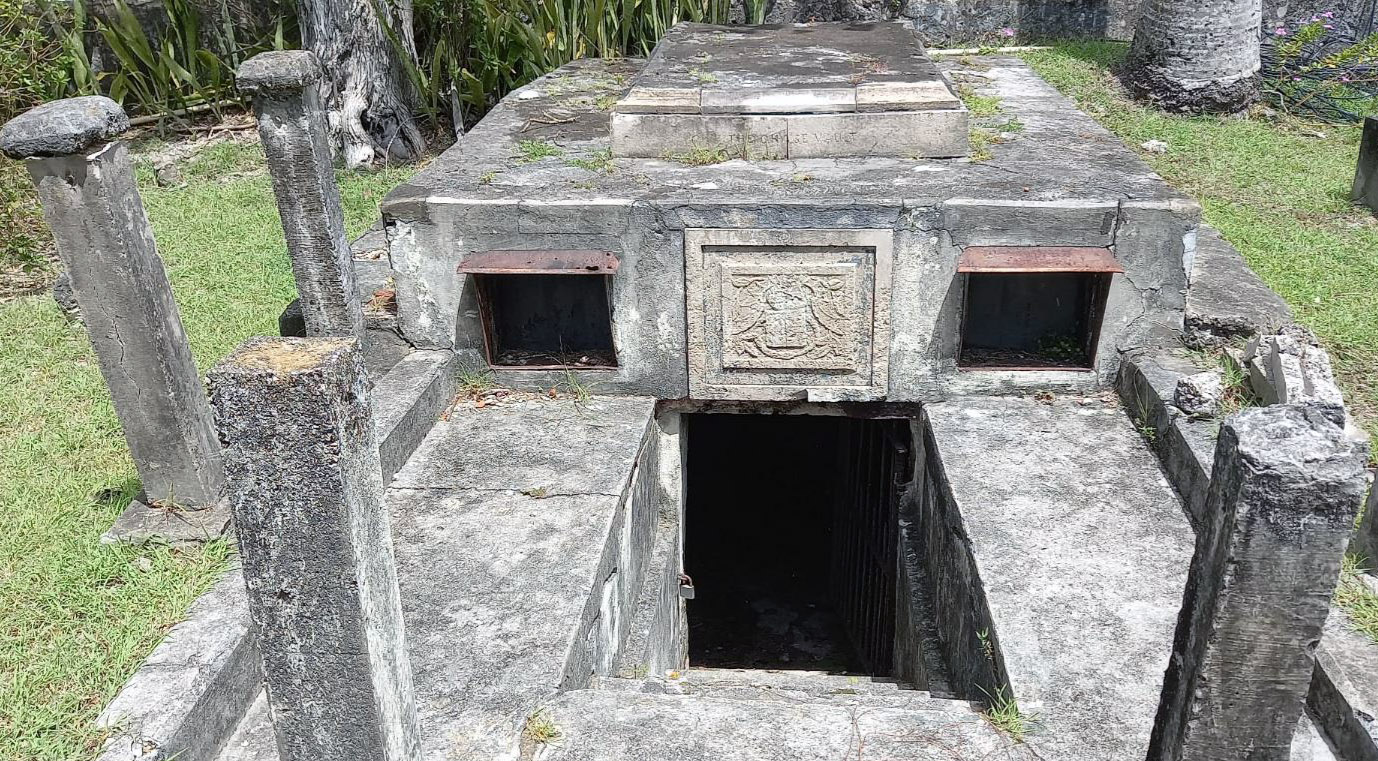
The story belongs to Christ Church parish in Barbados, where the Chase family vault still stands. Its most familiar versions describe heavy lead coffins repeatedly found displaced between burials in the early nineteenth century. Some were said to have been thrown against the walls; one was found standing on end.
A sealed chamber. Coffins too heavy to move easily. No obvious way in.
The final opening, according to later accounts, took place with the island’s governor among those present. Sand had been spread across the floor to reveal an intruder’s footprints. Marks had been made at the entrance. When the vault was opened again, the marks appeared undisturbed and the sand gave no answer.
The coffins had moved.
Or so the story goes. [1–2]
A Vault Near the Sea
One of the earliest published accounts appeared in 1833, in James Edward Alexander’s Transatlantic Sketches.
Alexander described a vault in a churchyard near the sea. According to his account, Mrs Goddard was placed there in 1807, followed by A. M. Chase in 1808 and D. Chase in 1812. Later that year, the vault was opened for another member of the Chase family.
The earlier coffins, he wrote, were found in confusion.
Alexander described further disturbances when the vault was opened for later burials, including those of a Mr Brewster in 1816 and a Mr Clarke in 1819. Each time, he said, the coffins were returned to their places before the entrance was closed again.
His account already includes the sandy floor, the absence of footprints and the presence of Lord Combermere, the governor. Alexander gives 1819 as the date of the final opening. Later versions describe a further inspection in 1820. [1–2]
Alexander did not identify his source for the story. He was writing more than a decade after the last disturbance he described. His book establishes that the account was in print by 1833; it does not take us inside the vault at the time of the burials.
FROM THE ARCHIVE · ORIGINAL SOURCE
The Account Published in 1833
The pages below come from James Edward Alexander’s Transatlantic Sketches, volume I. His account of the Barbados vault begins near the bottom of printed page 161 and continues onto page 162. Scroll within the document to follow the original text.
Reading note: these are complete original pages. The vault account begins and ends partway down them, so surrounding material and period language remain visible. Page 163 completes Alexander’s comparison with a similar account from Suffolk.
If the document does not appear in your browser, use “Open the PDF” or the download button above.
The Governor and the Sand
As the story continued to circulate, other writers gave the final opening a more detailed form.
In Robert Schomburgk’s History of Barbados, published in 1848, the family became concerned enough to take particular care when closing the vault. Fine sand was placed on the floor, intended to reveal any unauthorised entry.
Schomburgk’s account says Lord Combermere subsequently asked to have the vault opened. The coffins were again displaced. One of the largest lay across the passage, and the marks made when the entrance was secured were said to be undisturbed.
The family then decided to remove the bodies and bury some elsewhere. [2]
This is the version that gives the case its carefully staged test: a closed space, a prepared floor and an inspection by an important official. But Schomburgk’s account was published fifteen years after Alexander’s, and the versions do not agree on every date or detail.
The sequence familiar from modern retellings is built from a record less tidy than it first appears.

Who Saw the Coffins?
A detailed account has been attributed to a local man, Nathan Lucas, who was said to have witnessed the last opening.
That sounds like the document the investigation needs. But investigator Benjamin Radford notes that Lucas’s original account has not been located and that the statement was attributed to him by an unidentified source. Accounts associated with the parish rector, Thomas Orderson, also survive in differing forms. [2]
Researchers have looked for contemporary confirmation in church records, newspapers and other material. Radford reports that no account of the disturbances was found in the records he discusses from the years in question.
That is not proof that no such document exists. It means that the evidence available to this report does not establish the disturbances through an independently examined record from the time.
The question changes at this point. Before asking how a sealed coffin could move, we need to know how securely its movement was recorded.
Water, Intruders and Stories
Several explanations have been offered over the years.
Someone may have entered the vault and shifted the coffins. Floodwater might have lifted and displaced them. An earthquake might have disturbed their arrangement. Some have proposed a supernatural agency; others have argued that the account developed as folklore.
Each explanation meets the same difficulty. We do not have a contemporary inspection of the entrance, the floor and the coffins against which to test it. The later descriptions of undisturbed seals and clean sand are themselves part of the story that needs checking.
Water is a useful example. A sealed coffin can be buoyant under the right conditions, even if it is heavy. But that does not establish that this vault flooded, that the particular coffins floated, or that water left them in the positions later described. Radford examined the location and argued against flooding as an explanation. [2]
He also drew attention to other stories of moving coffins, including accounts from elsewhere in Barbados. Similar stories do not prove that the Chase Vault account was invented, but they show that its central image had a life beyond one churchyard.
A family opens a tomb. The dead have refused to remain where they were placed.
The details can change as the story travels.
The World Around the Vault
The Chase Vault story emerged in a society shaped by slavery and colonial power.
In a study of its cultural setting, researchers Niall Finneran and Christina Welch examine the legend alongside Gothic literature and the fears of Barbados’s planter class, including their attitudes towards the spiritual practices of enslaved people. [3]
That context does not identify who first told the story or prove that a particular explanation was true. It does remind us that later accounts were written in a society marked by unequal power—and that claims about the people around the family deserve the same scrutiny as claims about the coffins.
The Archive Assessment
The vault is real. The story of the displaced coffins was in print by 1833, and later writers described the governor’s involvement and the precautions against intrusion in greater detail.
Whether the coffins were actually found in those positions is less secure. The accounts were published after the supposed disturbances, differ from one another, and have not been supported by a contemporary record identified in the material examined here.
The vault remains. It is the events once said to have taken place inside it that are difficult to recover.
Archive Classification
Unresolved
The Chase Vault is an identifiable burial place with a longstanding account of disturbed coffins. Later versions describe precautions against intrusion, but those precautions and the movements themselves remain dependent on accounts published after the reported events.
Key Facts
- Location: Christ Church Parish Church, Barbados.
- Reported period: Early nineteenth century; the accounts differ over the final opening.
- Central claim: Coffins were repeatedly found displaced inside a closed burial vault.
- Early publication: James Edward Alexander’s Transatlantic Sketches, 1833.
- Principal difficulty: The available accounts were published after the reported disturbances and vary in their details.
Continue Through the Archive
Explore more stories in which a familiar place became the centre of an enduring mystery.
Sources
- James Edward Alexander — Transatlantic Sketches, volume I, 1833, pp. 161–163. Read the extracted original pages · PDF. The Chase Vault account begins on page 161.
- Benjamin Radford — “Reopening the Chase Vault Mystery”, Skeptical Inquirer, May/June 2020. Includes a discussion of Schomburgk’s 1848 account, later versions and proposed explanations.
- Niall Finneran and Christina Welch — “Barbadian Gothic: The Moving Coffins of the Chase Vault in Socio-Cultural Context”, Folklore, volume 131, number 1, 2020, pp. 55–75. The publication abstract was consulted for its historical and cultural approach.
Further Reading
Robert H. Schomburgk, The History of Barbados, 1848. Schomburgk’s account of the vault is discussed in Benjamin Radford’s investigation listed above.
Brian V. Ridout, “An Analytical Review of the Chase Vault Mystery at Christ Church, Barbados”, Journal of the Society for Psychical Research, volume 82, number 4, 2018, pp. 219–239.
Image Credits
Header: Chase Vault, Barbados, BathyMetrix, 2025, CC0 1.0.
Second photograph: Chase Vault, Barbados, BathyMetrix, 2025, CC0 1.0.
Editorial note: Alexander’s extracted pages were examined for this report. Schomburgk’s account and the later witness-document claims are discussed through Radford’s published investigation. The original Lucas and Orderson documents and Ridout’s complete article were not independently examined.