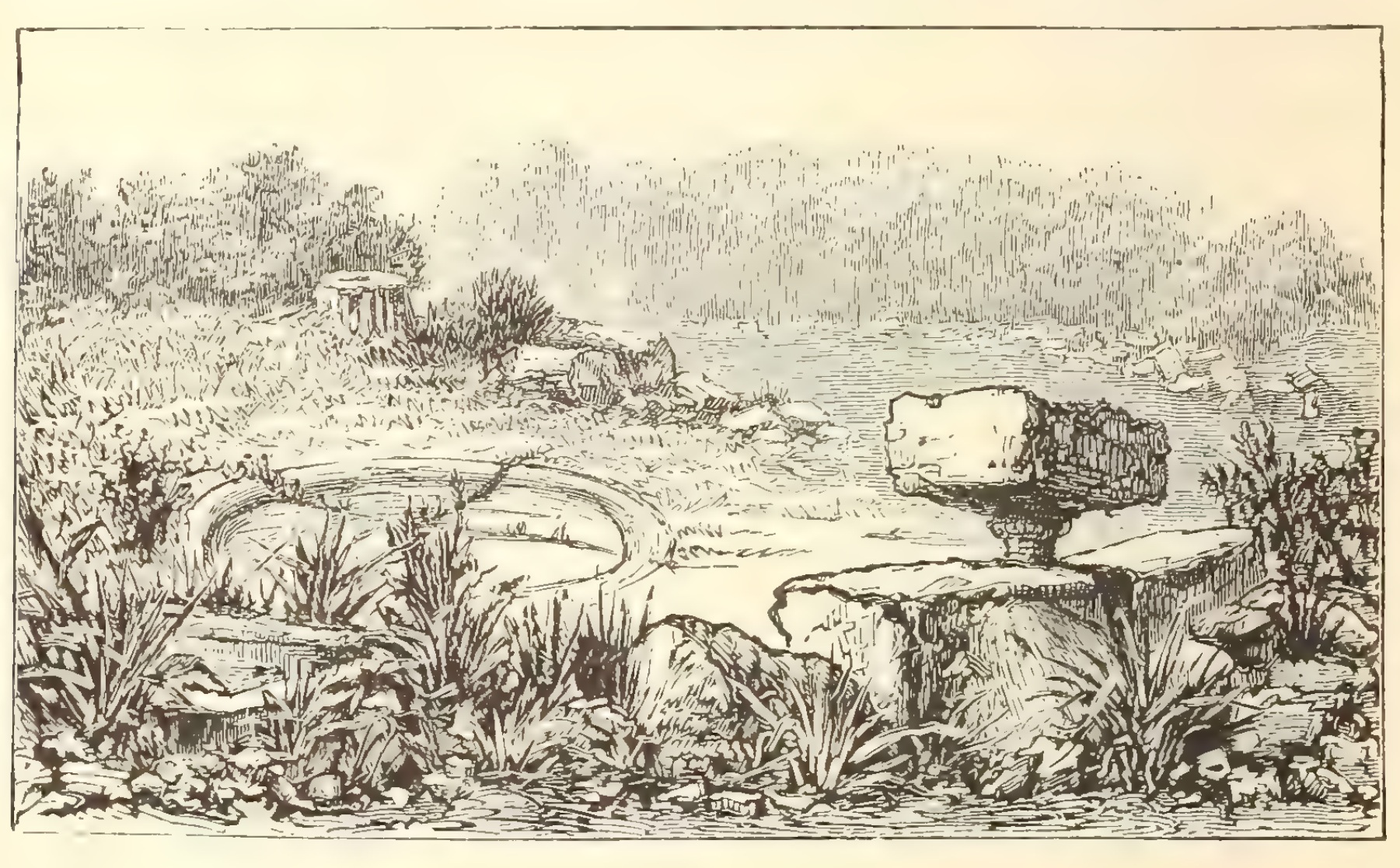
“Ruins on the Kalahari Desert”, from G. A. Farini’s Through the Kalahari Desert (1886), p. 358. A published illustration accompanying the claim, not an independently authenticated photograph of a ruined city. Smithsonian Libraries scan; public domain.
The Lost City of the Kalahari: Farini’s Desert Ruins
KEY FACTS
- Date: Journey in 1885; account published in 1886.
- Location: Kalahari region, southern Africa; precise site uncertain.
- Reported discovery: Extensive stone remains, partly covered by sand.
- Principal source: Traveller G. A. Farini’s illustrated expedition account.
A Line of Stone in the Sand
The party was heading south when a mountain appeared ahead. One of the men thought he recognised it. Farini disagreed: by his reckoning they had not travelled far enough to have reached that landmark. They continued towards it, and camped beside something that would give the journey a life far beyond its return home.
A long line of stone lay near the mountain’s foot. Parts disappeared beneath the sand; other sections stood exposed. To Farini, the arrangement suggested the remains of an enormous structure. He wanted to stop and dig. Some of his companions wanted to get home.
That disagreement survives in the book he published the following year. So do descriptions of unusually regular stones, a striking illustration and a brief account of what the digging supposedly revealed. The encounter occupies only a few pages, but it leaves a much larger question hanging over the journey.
If a substantial ruin had stood beside their camp, where was it? And how could later readers follow a route whose uncertainty was already apparent at the moment of discovery?